What is shadow work?
Shadow work is the practice of making contact with the unconscious, disowned parts of yourself and bringing them into your conscious field of awareness.
The work is about shining awareness on what is being repressed, why it is being repressed, and slowly building a healthy relationship with this. The term comes from the Swiss psychiatrist Carl Jung, who called the shadow "the thing a person has no wish to be." It's the reservoir of traits, needs and emotions you've split off because somewhere along the line, they got you punished, shamed or ignored.
The shadow isn't "bad." Buried anger, tenderness, ambition, sexuality, rage, softness, sensitivity, anything you learned wasn't safe to show, lives there.
These parts need an outlet, and when ignored, run you from underneath. Ever wondered why you keep making the same mistakes, meeting the same types or people, getting into the same relationships? This is the shadow operating in the dark. Met consciously, the content of the shadow becomes energy that can be integrated and used positively.
Why shadow work matters for men
Most men perform an identity, and get lost in this. Attachment to this identity then erodes self-connection, trust and keeps you trapped within the narrow confines of that identity.
It limits your life, who you can become, what you can do, and how much you can love and connect with others. This blocks your ability to live a fulfilling life, and allows weakness to accumulate within you in the form of resentment, unexpressed anger, and fear. The parts of you that remain unexpressed under the weight of the persona are then able to control you unconsciously.
They manifest as:
- Sudden, disproportionate anger, at your partner, your kids, the road.
- Numbness, screens, porn, drink, weed, over-working. Anything that allows you to avoid the discomfort and keep the volume down.
- Self-sabotage right at the edge of breakthrough.
- The persistent, unnameable sense that you're pretending and that something is "missing".
Shadow work is how you stop being run by what you can't see. It's also how you stop projecting it onto the people you love, and learn how to face the dragon in your depths.
The four archetypes: King, Warrior, Magician, Lover
Jungian analysts Robert Moore and Douglas Gillette mapped mature masculine energy into four archetypes. Each has a mature centre and two shadow poles, one active, one passive. Shadow work for men is largely about noticing which pole you're stuck in and reclaiming the centre.

The King
Centre: Orders his inner world. Blesses others. Holds the realm.
Active shadow: Domineering, controlling, contemptuous.
Passive shadow: Abdicates, avoids decisions, waits to be told.

The Warrior
Centre: Disciplined action in service of something greater than himself.
Active shadow: Sadistic, cruel, burns everything down.
Passive shadow: Masochistic, conflict-avoidant, quietly resentful.

The Magician
Centre: Sees what others can't. Uses knowledge to heal and initiate.
Active shadow: Manipulator - hoards knowledge, gaslights, controls.
Passive shadow: Denying innocent - pretends he doesn't know.
The Lover
Centre: Alive to beauty, sensuality, connection, meaning.
Active shadow: Addicted - to sex, food, porn, weed, feeling, intensity.
Passive shadow: Impotent - cut off, numb, disembodied.
The triangular dynamic
Moore and Gillette mapped each of the four archetypes as a triangular dynamic:
- The Apex (Mature Centre): Represents the balanced, integrated, and fully realised expression of that masculine energy, ego-alignment with the archetype.
- The Active Shadow (Inflation / Hyper-activation): Occurs when a man is overwhelmed or possessed by the archetype's power. This leads to abusive, controlling, or explosive behaviour e.g. The Tyrant, The Sadist, The Manipulator, The Addicted Lover.
- The Passive Shadow (Deflation / Hypo-activation): Occurs when a man suppresses or is disconnected from that energy. This leads to submission, disengagement, or victimhood e.g. The Weakling, The Masochist, The Denying Innocent, The Impotent Lover.
How to actually do shadow work
Shadow work isn't a hack. It's a practice. It's how we make contact and explore our inner-horizons.
- Track your triggers. When you overreact, something in your shadow is activated. Write it down. What happened? What did you feel in your body before you reacted?
- Name the projection. The trait you can't stand in someone else is almost always one you've disowned in yourself. "He's so arrogant" often means "I've never let myself take up that much space."
- Ask which archetype is off. Is your King abdicating? Is your Warrior in weakling mode? Is your Lover acting out?
- Feel it, don't fix it. Sit with the sensation. Journal to it. Let it speak. This is where most self-help collapses, men try to think their way through what only the body can integrate.
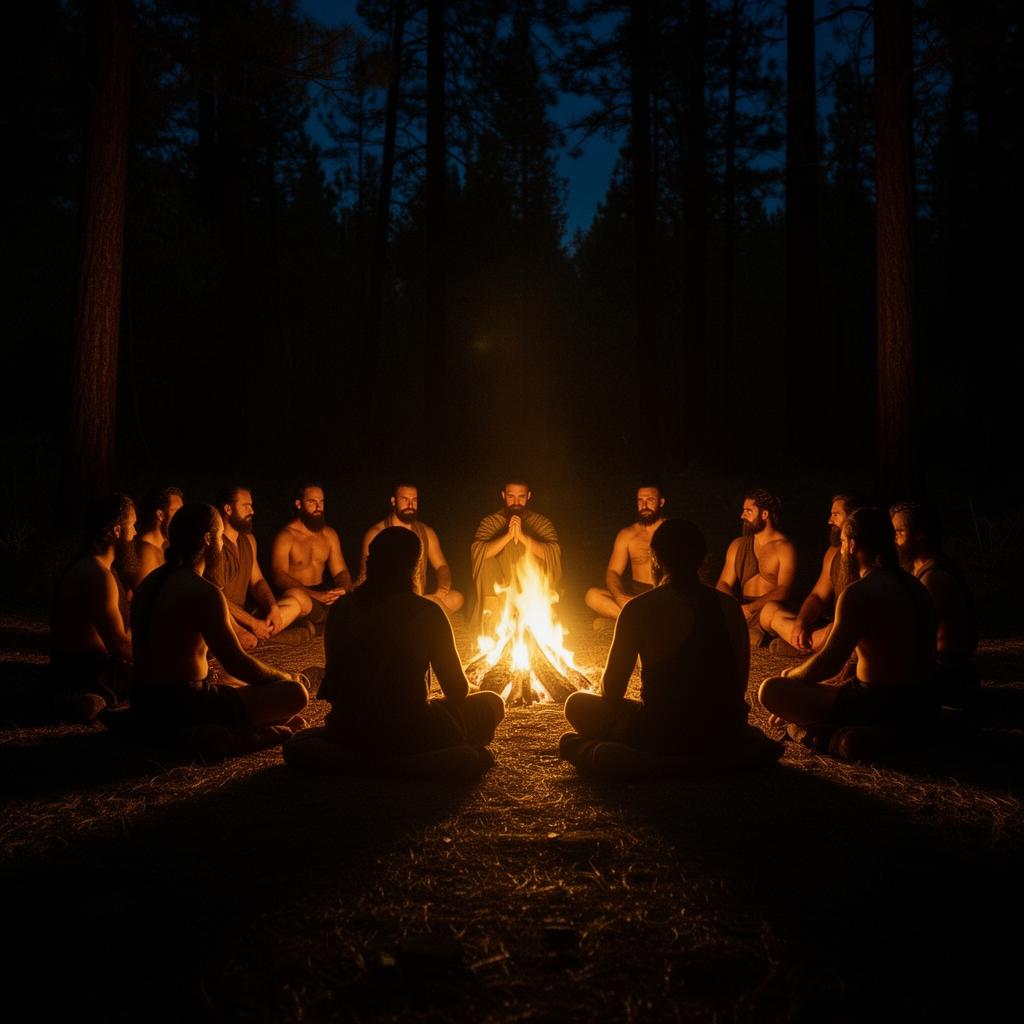
- Do it in a container. Shadow work alone can spiral. A coach, a men's circle, or a trained practitioner keeps the work from becoming rumination.
Five shadow work prompts to start now
Take one of these into your journal before sleep. Don't try to answer it perfectly, and let the first response surface, and sit with any discomfort that comes next. This is not a logical process, and the answers that come out may not make any sense to start with.
- What did I have to stop being, as a boy, to be loved?
- Who am I quietly jealous of, and what does that tell me I want?
- What am I most afraid people would see if they really saw me?
- Where in my life am I performing instead of choosing?
- If my anger had a voice, what would it say?
Common mistakes men make with shadow work
Shadow work is powerful, but it can be misused. Here are the traps I see most often:
- Turning it into a project. Shadow work is a lifetime of work, not something with an end date and goal.
- Doing it alone forever. You can't see your own blind spots, that's what makes them blind. A skilled pracititioner will help you with these.
- Making it purely cerebral. Insight with the mind without facing the physcial embodiment of those parts, which feel uncomfortable to start with, will not help you align or get un-stuck.
- Confusing catharsis with integration. Meditating and doing the work alone in your room is nice, but going into life, and walking towards and allowing yourself to be triggered, to make contact with the unconscious contents of your shadow, and watch this process unfold will allow you to make real change.
Want to do this work in a container?
Horizons runs small focused containers and ongoing men's circles for men serious about doing the work. If any of this landed, the next step is the intake.